Paintless Dent Removal vs Panel Beating Methods Compared
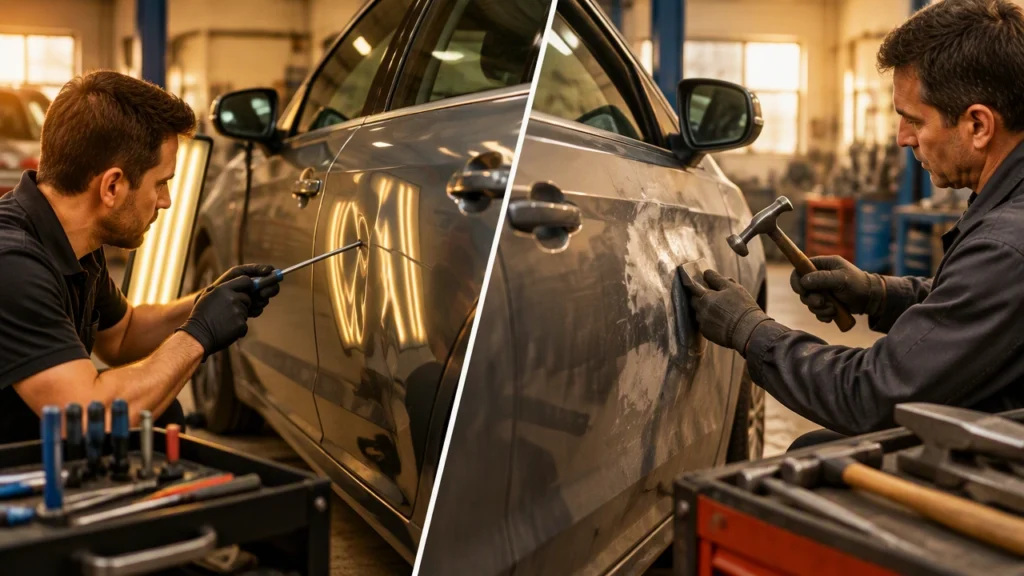
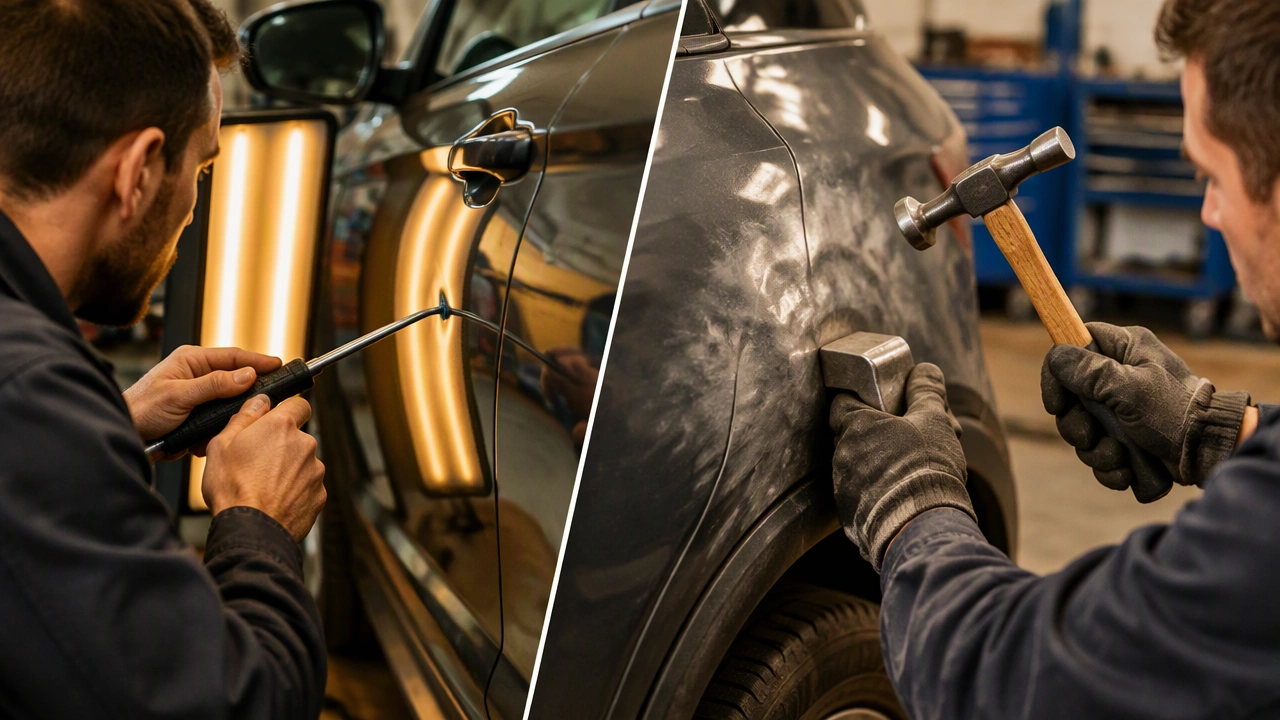
Choosing the right repair in a car repair workshop starts with understanding how the damage affects the metal, paint, and underlying structure. Paintless dent removal vs panel beating methods compared here focuses on practical differences: one method reshapes panels from behind while the other cuts, hammers, welds, and refinishes. The best result depends on dent size, paint condition, access to the back of the panel, and whether corrosion or structural damage is present.
How workshops assess body damage
A technician begins with a visual inspection under angled lighting, then checks the paint for cracks, chips, or flex marks. They look for sharp creases, stretched metal, and areas where the finish has broken. Next, the panel is examined from behind whenever possible. Access matters because some methods require a clear path to the reverse side of the damaged area.
The inspection also considers what lies beneath the panel. Braces, sound deadening, airbag components, and bonded parts can limit access. If the paint is intact and the metal is not heavily stretched, a non-invasive repair may be possible. If the panel has torn edges, deep scratches, rust, or misalignment, a more involved rebuild is usually required.
Paintless dent removal explained
Paintless dent removal, often shortened to PDR, reshapes the panel without repainting. Technicians use specially shaped rods, picks, and glue tabs to apply controlled pressure from behind or, in some cases, from the front. The metal is gradually massaged back to its original contour while the factory finish remains in place.
Best suited to shallow, accessible dents
- Parking-lot dings with smooth edges and no paint damage
- Hail damage, where many small dents cover a roof, hood, or doors
- Door creases that follow a line but do not cut through the clear coat
- Plastic trim or aluminum panels when the technician has the correct access and tools
PDR is efficient because it avoids body filler, primer, and paint blending. It also preserves the original factory coating, which can matter for corrosion protection and resale value. The process can often be completed in a few hours rather than several days.
Limitations of PDR
PDR cannot restore metal that has been badly stretched, nor can it repair torn, rusted, or heavily folded edges. If the paint is chipped, cracked, or scratched, the damage will remain visible after reshaping. Access is another constraint: a dent behind a double wall, a reinforced beam, or a bonded brace may be impossible to reach. In these cases, forcing the repair can cause more damage.
Traditional panel beating explained
Panel beating is the conventional method for rebuilding damaged bodywork. A technician works the panel with hammers, dollies, shrinking tools, and heat where appropriate. Severe sections may be cut out and replaced with a new or donor panel, then welded and aligned. Once the shape is restored, body filler may smooth minor imperfections before primer and paint are applied.
Best suited to major or contaminated damage
- Collision damage with deep folds, torn metal, or displaced mounting points
- Rust and corrosion, where contaminated material must be removed
- Broken edges and holes that require welding or panel replacement
- Large, stretched dents that cannot be massaged back to shape
Traditional repair gives the technician full control over the panel’s structure. It can correct alignment, restore strength, and prepare the surface for a durable refinish. The trade-off is time: stripping, shaping, filling, priming, painting, and blending can take days, and the repair may be visible under certain lighting if the finish is not matched carefully.
Key differences between the two approaches
The main difference is how the metal is returned to shape. PDR moves the existing panel from behind, while panel beating works the surface directly and may replace sections. PDR keeps the factory paint, whereas traditional repair usually requires refinishing. Cost and downtime also differ, although both vary with the complexity of the damage.
Another important distinction is the type of defect each method handles well. Smooth, shallow dents respond well to pressure and patience. Sharp creases, torn edges, rust, and structural misalignment need material removal, welding, or replacement. A technician may also combine methods: PDR for smaller surrounding dents, followed by conventional repair on the damaged section.
What happens during each repair
Paintless dent removal process
The area is cleaned and inspected, then the technician chooses an access point. Protective coverings are placed around the work zone to prevent scratches. Using a reflection board or inspection light, the technician reads the dent’s high and low points and applies gradual pressure. The panel is checked repeatedly until the surface flows evenly into the surrounding contour. Finally, the area is cleaned and inspected under different lighting.
Panel beating process
The damaged section is marked and, if necessary, stripped of trim or coatings. The technician works the metal back toward its original form, checking alignment with gauges and reference points. Corroded or torn material is cut away, and replacement sections are welded in place. After grinding and smoothing, filler may be used to refine the surface. Primer follows, then color matching and clear coat, with blending into adjacent panels to reduce visible transitions.
How to choose the right method
Start with the paint. If the finish is intact and the dent is smooth, ask whether PDR is possible. Consider access: can a technician reach the reverse side without removing safety components or cutting into the panel? Then assess the depth and size. Long creases, sharp folds, and large areas of stretched metal usually point toward traditional repair.
Rust changes the decision. Surface corrosion may be treatable, but perforation or soft metal requires removal and reconstruction. Structural components, crumple zones, and mounting points should never be reshaped without proper evaluation. When in doubt, a workshop inspection provides a clearer answer than a photograph alone.
Cost, time, and long-term value
PDR generally costs less and finishes faster because it avoids paint materials and booth time. It is especially practical for fleets, leased vehicles, and hail events where many small dents appear at once. Traditional repair may cost more and take longer, but it is necessary when safety, corrosion protection, or appearance depends on rebuilding the panel correctly.
Neither method is universally better. The right choice balances the damage, the vehicle’s construction, and the owner’s expectations. A careful inspection and an honest explanation of limits help ensure the repair remains durable, visually consistent, and appropriate for the way the car is used.