Home / Diagnostics & Inspection
The Car Repair Process in a Professional Workshop, from Diagnosis to Delivery
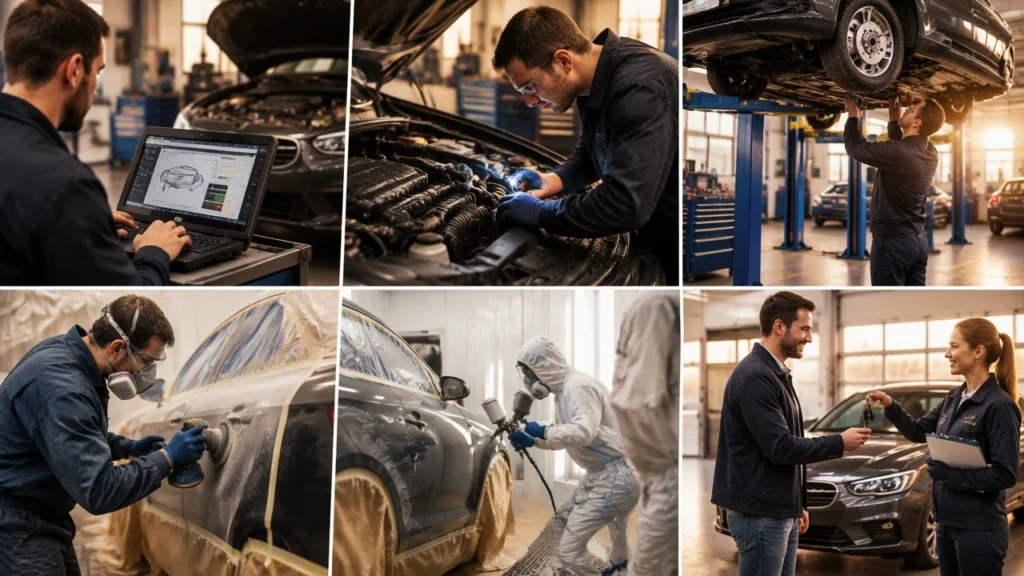
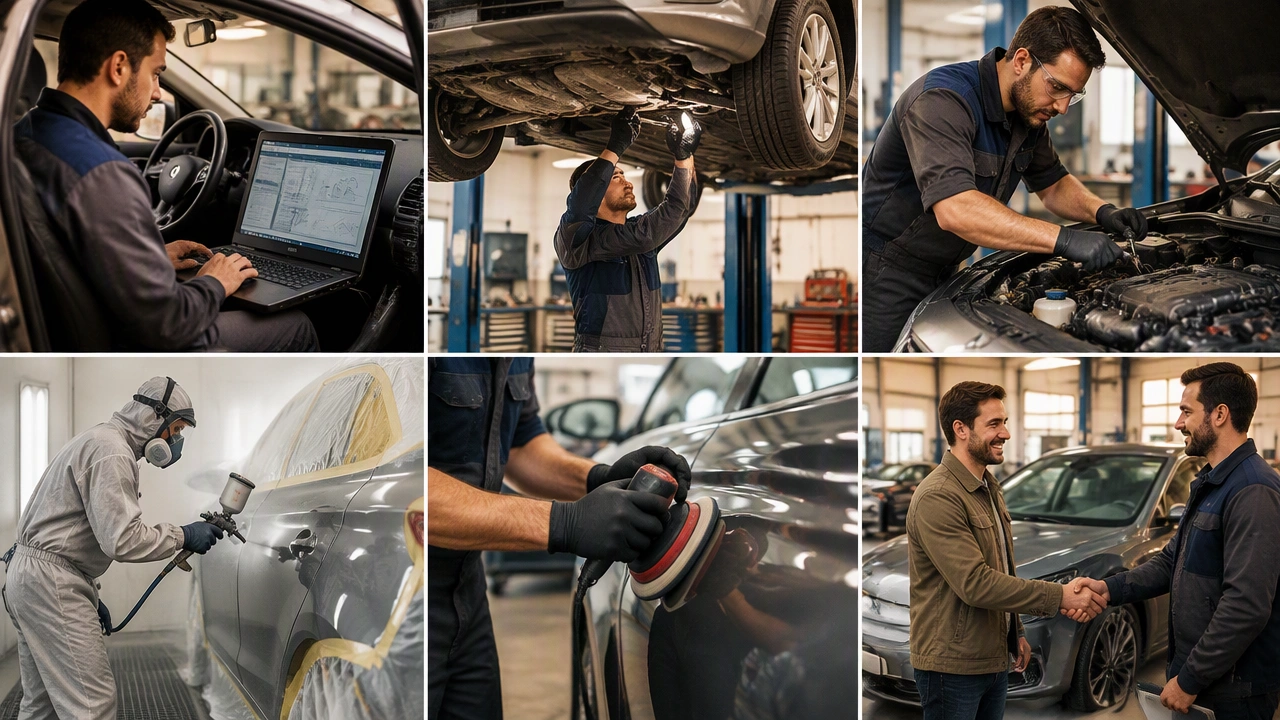
Understanding the car repair process in a professional workshop from diagnosis to delivery helps vehicle owners set expectations, reduce stress, and make informed decisions. While every shop has its own routines, most follow a structured path designed to identify faults accurately, communicate clearly, complete durable repairs, and verify quality before release.
Reception and intake
The process usually begins at reception, where the service advisor collects key information: reported symptoms, when they occur, driving conditions, and any warning messages. A good intake also covers service history, recent repairs, and customer preferences for communication and timing.
During the walk-around, the advisor notes visible damage, tire condition, fluid leaks, and accessory state. This protects both the customer and the workshop by establishing baseline condition before work begins. It also helps prioritize safety-related concerns.
Initial assessment and authorization
Before deeper work, the workshop performs an initial assessment. This may include a short road test, basic electrical checks, visual inspection, and diagnostic scanning. The goal is to define a likely fault area and estimate time and cost.
Clear authorization is essential. Many workshops outline three layers: diagnosis, quoted repair, and potential additional findings. Transparent authorization prevents surprises and ensures the vehicle is not touched beyond agreed scope without consent.
Diagnosis and fault isolation
Professional diagnosis moves from symptoms to causes, not the other way around. Technicians often combine structured checks with data analysis. Typical steps include:
- Verifying the customer concern under repeatable conditions
- Reviewing service history and technical bulletins
- Scanning control modules and reading freeze-frame or event data
- Performing functional tests, electrical measurements, or mechanical checks
- Isolating the root cause before recommending parts replacement
This stage may involve test drives, smoke testing for vacuum or EVAP leaks, compression or leak-down tests, bearing noise analysis, or thermal imaging for electrical resistance. The result is a documented fault theory with supporting evidence.
Estimation and communication
Once the fault is defined, the workshop prepares a detailed estimate. A strong estimate explains the repair strategy, required parts, labor operations, and any related items that affect reliability or safety. It should also outline what will happen if additional issues appear during disassembly.
Good communication here is practical: expected completion time, parts sourcing, and how the customer will be updated. Many shops use photos or short videos to show wear, leaks, or damage, which builds trust and reduces misunderstandings.
Parts planning and sourcing
Professional workshops consider quality, fitment, availability, and warranty. Options often include original equipment parts, reputable aftermarket alternatives, or reconditioned components for specific systems. The choice depends on vehicle age, performance requirements, and budget.
Before installation, parts are checked against the order, inspected for shipping damage, and validated for compatibility with software or hardware revisions. This reduces comebacks caused by incorrect or outdated components.
Preparation for repair
Before tools touch the vehicle, the workshop protects interiors, documents pre-existing damage, and plans the repair sequence. For complex jobs, technicians review service procedures, torque specifications, and calibration requirements. This preparation improves accuracy and reduces rework.
The repair phase
During the repair, the focus is on method, cleanliness, and traceability. Fasteners are organized, critical steps are checked against specifications, and any related parts that affect safety or reliability are replaced as needed. If the repair involves electronics, the technician plans for reprogramming, initialization, or adaptation steps.
Work is often staged: disassembly, component replacement or machining, reassembly, and preliminary checks. Keeping the vehicle and workspace clean reduces the risk of contamination and helps spot secondary issues early.
Quality control and verification
Quality control is more than a final glance. It typically includes:
- Road testing to confirm the original symptom is resolved
- Functional checks of related systems
- Leak checks and torque verification where applicable
- Scan tool clearance of stored codes and confirmation that monitors run as expected
- Final inspection against a checklist for safety and cleanliness
Some repairs require calibration of driver-assistance sensors, steering angle sensors, or battery management systems. Quality control ensures these steps are completed before handover.
Documentation and transparency
A complete repair record supports warranty, future maintenance, and customer confidence. It should include diagnosis notes, measurements, parts used, labor operations, software versions, and any test results. Invoices should match the work performed, with no vague or bundled line items that hide details.
When applicable, workshops retain scan reports, road-test notes, and before-and-after photos. This documentation helps if concerns arise later and creates a clear maintenance history for the vehicle.
Handover and customer guidance
At handover, the advisor explains what was repaired, why it was necessary, and how to monitor performance in the first days. They review warranty terms, maintenance recommendations, and any follow-up items. A short test drive with the customer, when practical, can confirm satisfaction and answer questions on the spot.
Clear billing, returned old parts if requested, and a tidy vehicle show respect for the customer’s time and property. These small steps often matter as much as the repair itself.
Aftercare and follow-up
Professional workshops often schedule a brief check-in after complex repairs. This can catch early settling issues, confirm fluid levels, or verify software adaptations. A structured aftercare approach improves long-term reliability and strengthens the service relationship.
Why a structured process matters
The car repair process in a professional workshop from diagnosis to delivery is ultimately about reducing uncertainty. A predictable sequence improves accuracy, controls costs, and helps customers understand the value of skilled labor, proper parts, and thorough verification. When each step is visible and justified, repairs become more reliable and ownership becomes less stressful.