Home / Diagnostics & Inspection
How OBD2 Scanners Diagnose Engine Issues in Car Repair Workshops
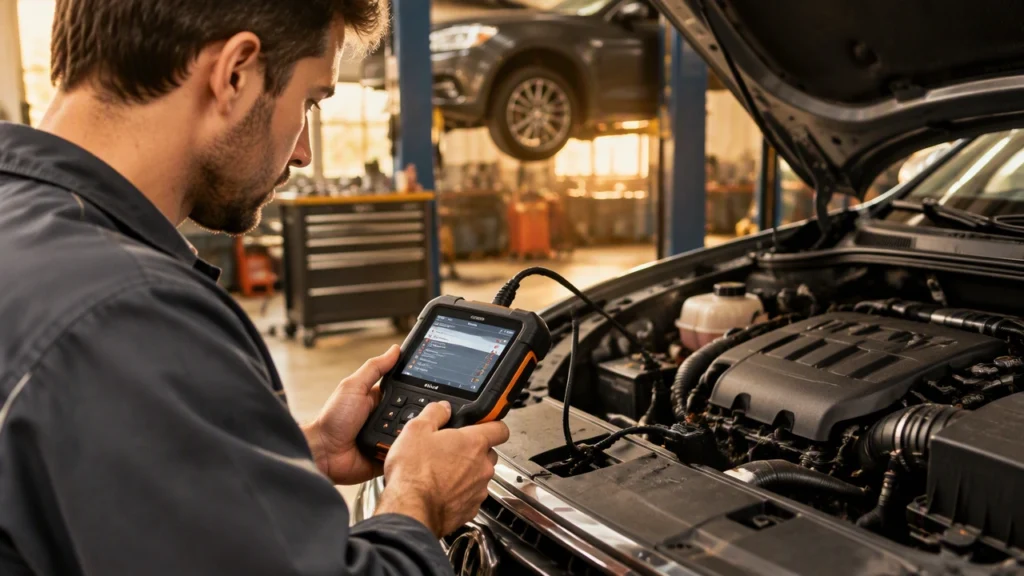
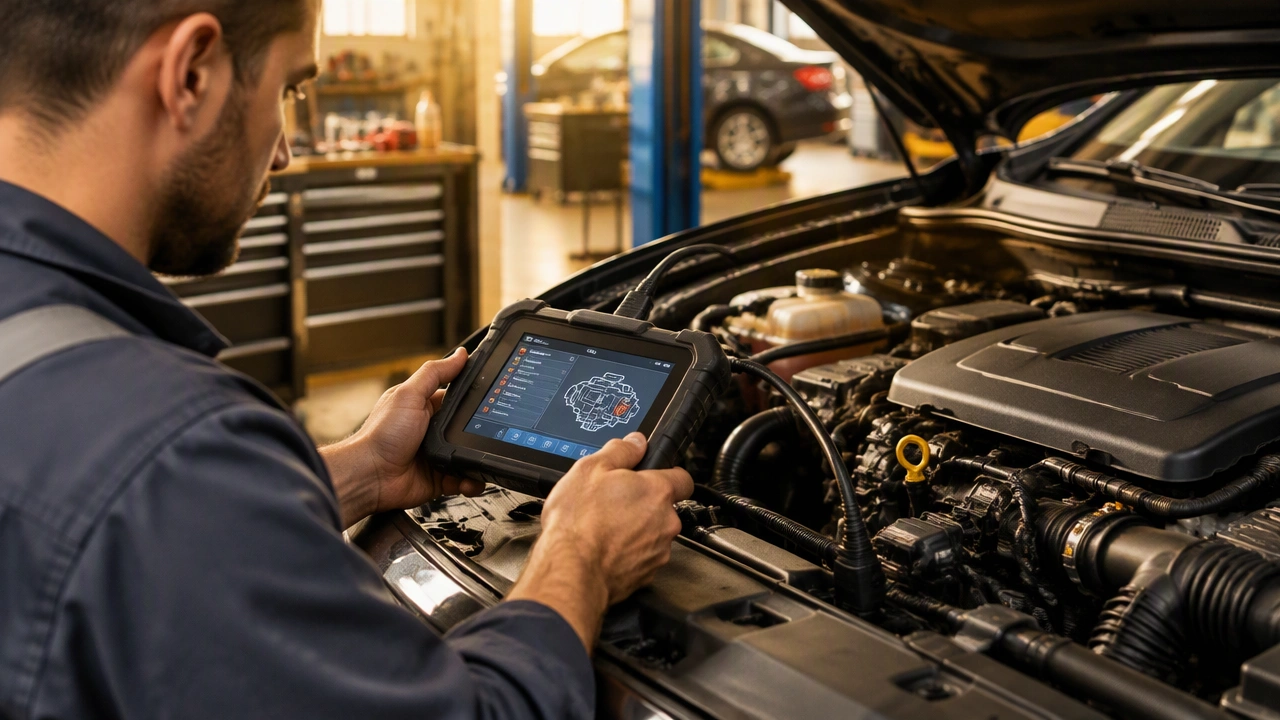
Modern engine diagnostics in a workshop still start with careful listening, visual checks, and experience, but the OBD2 port gives technicians a faster path to the truth. In everyday car repair, a scanner turns a vague complaint such as a hesitation, rough idle, or warning light into specific data and codes that can be tested. That shift from guesswork to measurement is what makes the process efficient and repeatable.
What OBD2 diagnostics actually do
The On-Board Diagnostics II system is a standardized interface that lets a scan tool read the engine control module. The tool pulls stored fault codes, also called diagnostic trouble codes, along with freeze-frame data that captures the conditions when a fault was set. Just as important, it can show live data streams from sensors and actuators, and it can run bi-directional commands to verify component response. Together, these functions explain how OBD2 scanner diagnostics finds engine fault codes in workshop environments and helps technicians confirm root causes before replacing parts.
Step by step: how a workshop diagnoses an engine fault
1) Interview and verification
A technician begins by confirming the customer concern. When the issue is intermittent, they check for patterns: cold start only, under load, at idle, or during braking. They note any recent service, because a new code can appear after a battery disconnect, air filter change, or fuel fill. The aim is to reproduce the symptom and establish the conditions under which it occurs.
2) Preliminary checks
Before going deep into data, the shop performs basics that save time. That can include checking for obvious vacuum leaks, inspecting the air filter, verifying oil level and condition on variable valve timing engines, and confirming battery voltage. A weak battery or poor ground can set misleading codes, so stabilizing the electrical environment is part of good diagnostics.
3) Connect the scanner and read codes
The technician connects to the OBD2 port, usually under the dashboard, and reads both global powertrain codes and manufacturer-specific codes. Global codes are standardized, while manufacturer codes provide extra detail unique to a brand. They also retrieve pending codes, which are faults the module has detected but not yet confirmed. This snapshot gives the first strong direction.
4) Review freeze-frame and mode $06 data
Freeze-frame shows the engine load, rpm, temperature, and fuel trim at the moment the fault was logged. Mode $06 provides raw test results from the engine computer’s self-monitoring, such as catalyst efficiency or misfire counters. These layers turn a single code into a story about when and how the problem appeared.
5) Analyze live data
Live data is where diagnosis becomes precise. A technician watches sensor values change in real time while the engine is idling, revving, or under load. Common checks include:
- Long-term and short-term fuel trims to see if the engine is running rich or lean.
- Oxygen sensor voltage and switching frequency to judge mixture control.
- Coolant and intake air temperature to verify sensor accuracy.
- Mass airflow or manifold pressure readings compared with expected values.
- Ignition timing and misfire counters to spot combustion issues.
- Catalyst monitor ratios to evaluate converter health.
When a sensor reads flat, jumps erratically, or lags behind expected changes, it points to a faulty sensor, wiring fault, or a mechanical issue affecting that sensor’s environment.
6) Bi-directional control and system tests
Many scan tools allow bi-directional commands. A technician can command the cooling fan to run, pulse injectors, activate the EVAP purge valve, or test individual ignition coils. If the component responds as commanded, the control side is likely good. If it does not, the problem is often in the wiring, the driver circuit, or the component itself. This step replaces a lot of speculation.
7) Correlate mechanical and electrical clues
Not every engine fault is electrical. A code for a lean condition may be caused by a gasket leak, a sticking EGR valve, or a clogged fuel injector. A misfire code could point to spark plugs, coils, compression loss, or timing chain stretch. The best workshops cross-check scan data with compression tests, relative compression checks, fuel pressure readings, and smoke tests for vacuum leaks. That correlation prevents unnecessary parts replacement.
Common patterns and what they mean
Fuel trim clues
Large positive long-term fuel trim at idle that improves at higher rpm often indicates a vacuum leak or low idle air control. If fuel trims are high across the entire range, a weak fuel pump, clogged filter, or dirty injectors become stronger suspects.
Oxygen sensor behavior
A healthy narrowband oxygen sensor should switch frequently around the stoichiometric point. A slow or lazy sensor may be aging, contaminated, or seeing exhaust dilution from a leak. Upstream and downstream sensor comparisons help judge catalyst efficiency.
Misfire patterns
Misfire counters that follow a single cylinder suggest coil, plug, or injector faults on that cylinder. Random misfires across multiple cylinders often point to fuel quality, air metering, or broad mechanical issues such as timing or compression.
Interpreting fault codes correctly
A fault code is a symptom pointer, not a final diagnosis. The most useful approach is to treat the code as the start of a test plan. The technician reads the code, verifies the symptom, checks related data, performs component tests, and only then concludes the root cause. This discipline is how workshops avoid the common trap of “parts cannon” repairs.
Workshop tools that support the scan tool
Technicians often pair OBD2 data with a multimeter, a lab scope, a smoke machine, a fuel pressure gauge, and an infrared thermometer. The scan tool provides direction and confirmation, while these tools validate the electrical and mechanical side of the system. In modern cars, a stable power supply during testing is also important, so shops may use a battery maintainer to keep voltage steady while collecting live data.
Real-world example: diagnosing a lean code
Consider a vehicle with a P0171 system too lean code. Live data shows high long-term fuel trim at idle, normal oxygen sensor switching, and a slightly low mass airflow reading. A smoke test reveals a cracked intake boot. After replacement, trims return to normal and the code does not return. The scan tool did not replace the boot, but it focused the diagnosis and saved time.
Why OBD2 diagnostics improve repair quality
Using live data and freeze-frame context turns a warning light into a testable hypothesis. Technicians can measure, confirm, and document the fault before and after repair. That process improves accuracy, reduces comebacks, and helps explain the repair to the customer with clear evidence rather than guesswork.
Takeaway for vehicle owners
If your check engine light is on, a quick scan can reveal whether the issue is urgent or safe to schedule later. More importantly, a proper diagnostic session that includes live data and component testing will usually find the real cause faster than simply replacing the part named in the code. In a modern workshop, OBD2 scanning is the starting point that connects symptoms, data, and a reliable repair.