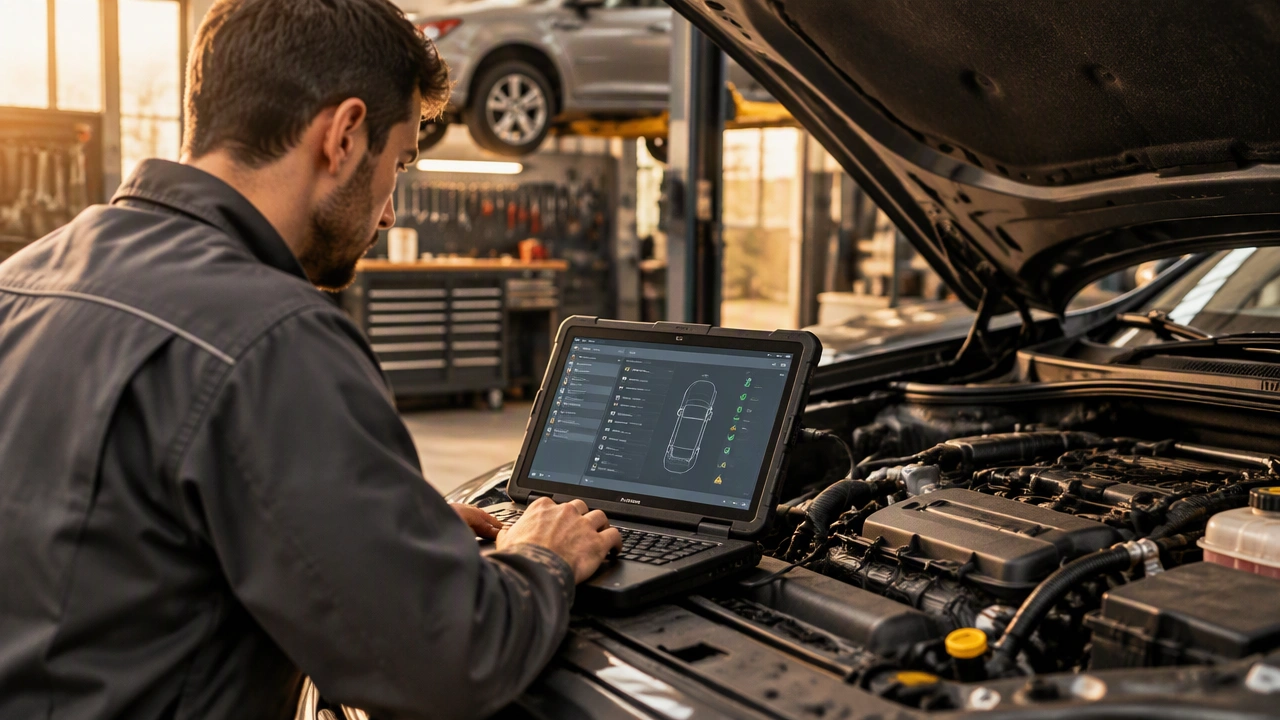
Many vehicle faults share similar symptoms. A misfire could be caused by a spark plug, ignition coil, injector, compression problem, or wiring issue. That is why diagnosis comes before replacement. A technician starts by collecting information: when the fault appears, temperature, load, speed, and recent repairs. Then they use a scan tool to read live data, freeze-frame data, and pending codes. A multimeter can check voltage and resistance, while an oscilloscope reveals signal patterns too fast for a meter. Compression, fuel pressure, and vacuum tests help separate mechanical problems from electrical ones. The goal is to reproduce the fault and prove the failed component. Replacing parts on suspicion often creates repeat repairs and unhappy customers. A strong diagnostic process saves money, reduces waste, and protects the vehicle. Good mechanics document their tests so the repair decision is clear, traceable, and easy to explain.