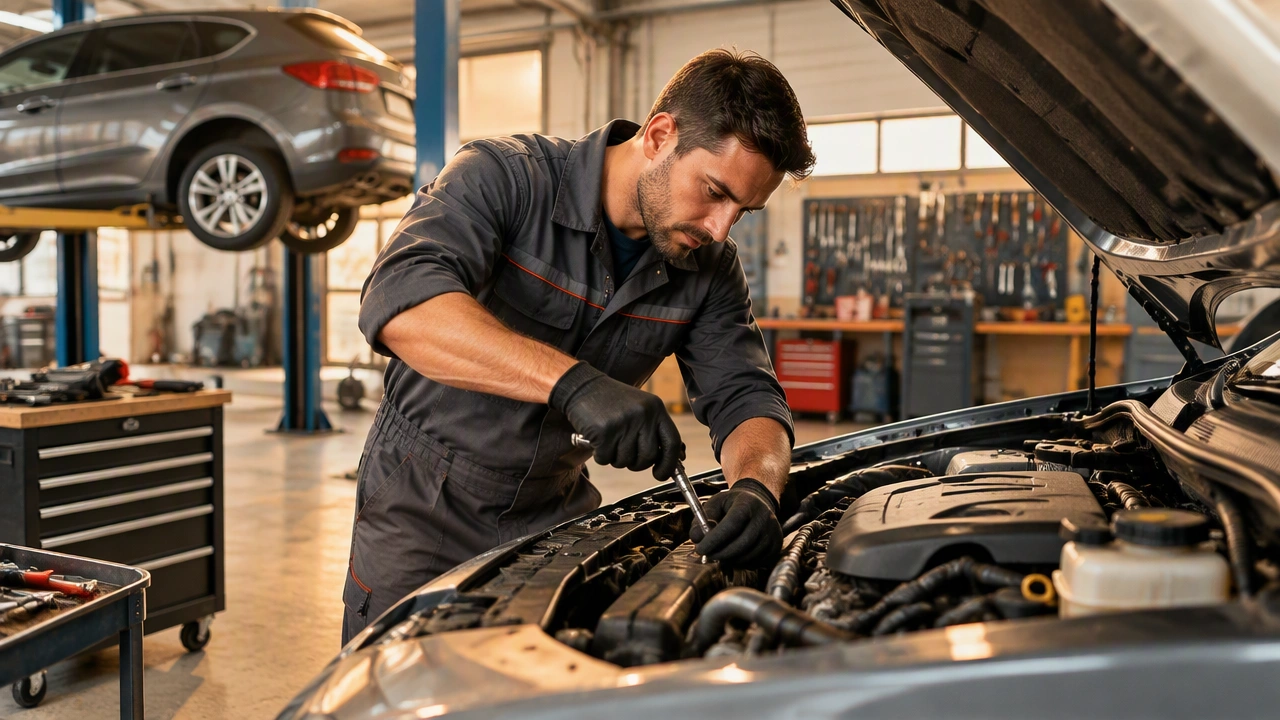
Repairing a car in a workshop follows a clear process. First, the technician listens to the customer, inspects the vehicle, and verifies the complaint. Next, they perform diagnostic tests using a scan tool, multimeter, oscilloscope, or road test. The diagnosis identifies the failed part or system, then the vehicle is safely raised and secured. Repairs may involve removing components, replacing worn parts, adjusting clearances, refilling fluids, and recalibrating sensors. Quality workshops follow manufacturer procedures, use torque specifications, and document every step. After reassembly, the car is tested to confirm the fault is gone, and a final inspection checks for leaks, warning lights, and loose fasteners. Communication matters too: mechanics explain findings, costs, and options before work begins. Modern repairs blend mechanical skill with electrical knowledge and software. A good workshop treats diagnosis as investigation, not guesswork, because replacing parts without evidence wastes time and money.