Home / Workshop Tools & Safety
Essential Workshop Tools for Beginners: Hand Tools, Power Tools and Diagnostic Equipment for Car Repair
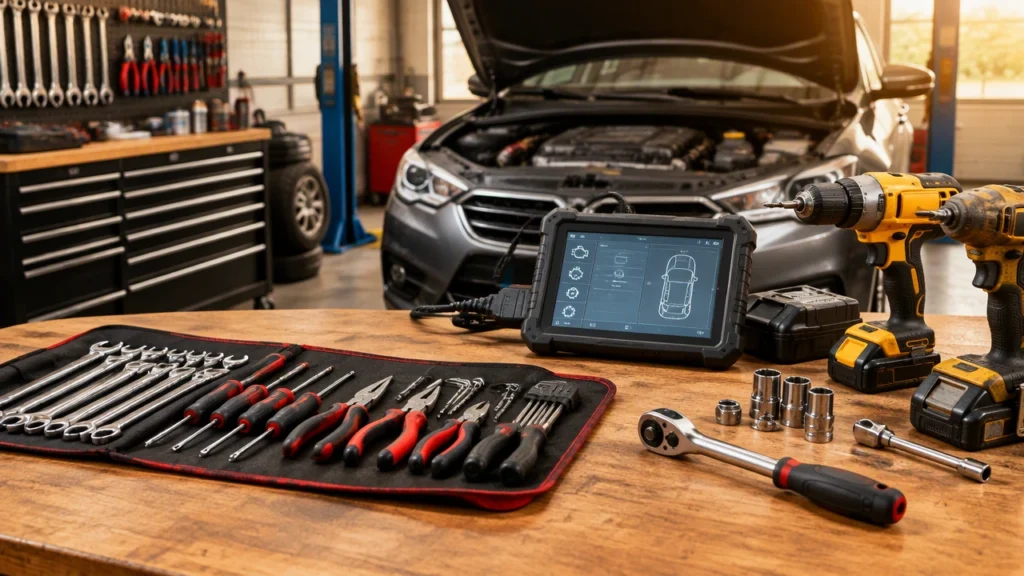
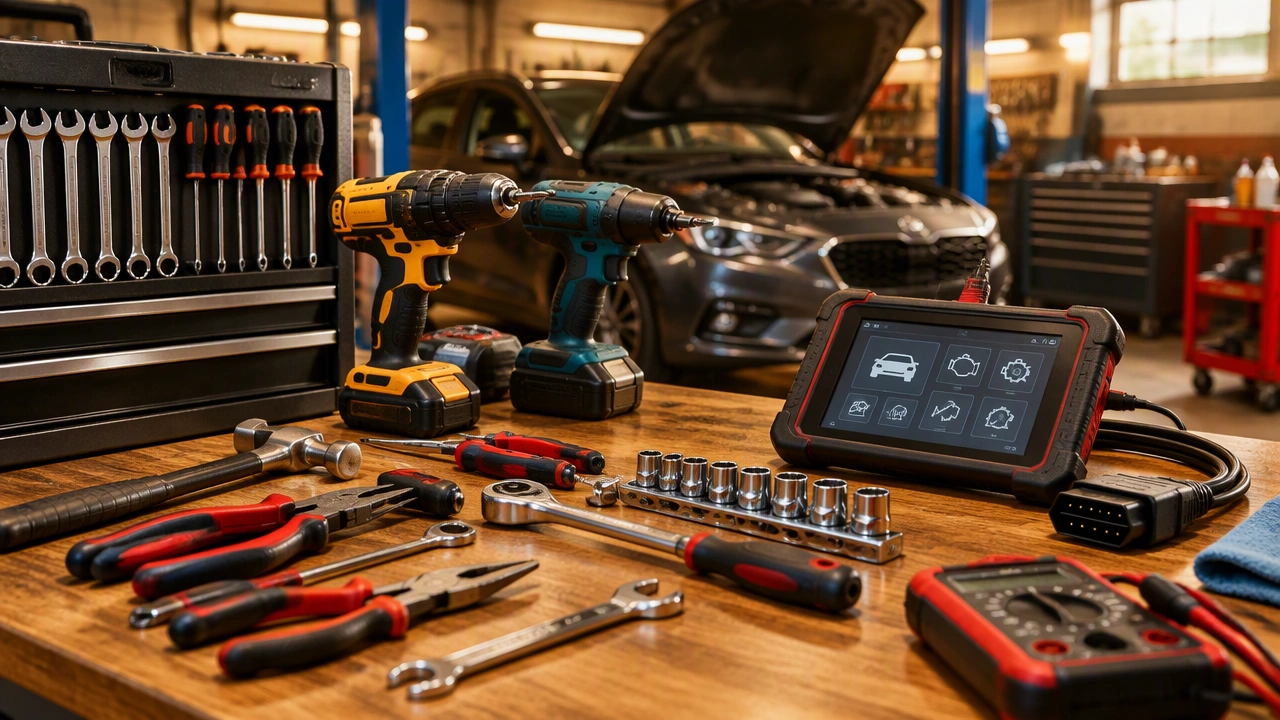
Car repair in a professional workshop follows a structured process that relies on the right combination of skill, organization, and equipment. Whether the job is a routine oil change, brake replacement, or complex engine diagnostics, every task moves through the same basic stages: inspection, diagnosis, disassembly, repair or replacement, reassembly, and final testing. For anyone setting up their first workspace, understanding this workflow helps you choose tools that are truly useful rather than simply impressive. This guide introduces the essential hand tools and diagnostic equipment for workshop beginners, along with power tools that make everyday jobs faster, safer, and more precise.
How Cars Are Repaired in a Workshop: The Basic Workflow
A typical repair begins with customer communication and a visual inspection. The technician notes symptoms, warning lights, noises, or fluid leaks, then moves to diagnostic testing. Once the fault is identified, the vehicle is lifted or secured, components are removed with the correct hand tools, and the faulty part is repaired or replaced. After reassembly, fluids are topped up, torque specifications are checked, and a road test or system scan confirms the repair. Having dedicated zones for diagnosis, repair, and testing, along with well-organized tools, prevents mistakes and saves significant time.
Essential Hand Tools Every Beginner Workshop Needs
Hand tools are the foundation of any workshop. They are reliable, precise, and do not require power, which makes them ideal for learning proper technique and developing mechanical feel. Investing in quality hand tools from the start reduces the risk of rounding fasteners or damaging components.
Socket Sets, Wrenches and Screwdrivers
A comprehensive socket set is the most used item in car repair. Choose a set with both metric sizes, typically 8mm to 19mm for passenger cars, in 1/4 inch, 3/8 inch, and 1/2 inch drive sizes. Six-point sockets grip fasteners better than twelve-point versions and are less likely to slip. Combine this with a set of combination wrenches, which offer an open end for quick work and a ring end for high torque. Ratcheting wrenches are a valuable upgrade for tight spaces. For screwdrivers, include flat-head and Phillips types in several lengths, plus a set of Torx and hex bits, as modern vehicles use these fasteners extensively for interior trim, brakes, and engine covers.
Pliers, Hammers and Pry Tools
Pliers extend your grip and leverage. A beginner kit should include needle-nose pliers for electrical connectors and clips, slip-joint pliers for general use, locking pliers for holding parts, and circlip pliers for retaining rings. A dead-blow hammer and a ball-peen hammer help free seized parts without damaging surfaces, while a rubber mallet is useful for trim and delicate assembly. Plastic pry tools and trim removal kits prevent scratches when removing door panels, dashboard elements, and clips, which is essential for maintaining a professional finish.
Measuring and Torque Tools
Precision matters in modern car repair. A torque wrench is non-negotiable for tightening wheel nuts, cylinder head bolts, and suspension components to manufacturer specifications. A 3/8 inch drive torque wrench covering 20 to 100 Nm handles most light work, while a 1/2 inch drive version is needed for higher torque applications. Add a digital caliper for measuring brake disc thickness, a feeler gauge for spark plug gaps and valve clearance, and a reliable steel tape measure and spirit level for workshop setup.
Power Tools That Make Workshop Work Faster
Once hand tools are covered, power tools increase efficiency and reduce physical strain, especially for repetitive or high-torque jobs.
- Cordless impact wrench: Essential for removing wheel nuts and stubborn suspension bolts quickly. A 1/2 inch mid-torque model offers the best balance for beginners.
- Cordless ratchet: Speeds up removal and installation of bolts in engine bays where manual ratcheting is slow.
- Drill and driver set: Useful for drilling, cleaning surfaces with wire brush attachments, and driving screws during body or interior work.
- Angle grinder: Needed for cutting, grinding rust, and cleaning metal surfaces before welding or painting. Always use with guards and eye protection.
- Air compressor with accessories: If space and budget allow, it powers impact tools, blow guns for cleaning, and tyre inflators.
For beginners, cordless battery platforms are often more practical than air tools, as they require less installation and can be used anywhere in the workshop.
Diagnostic Equipment for Modern Vehicles
Modern cars rely on electronic control units to manage the engine, transmission, brakes, and emissions. Without diagnostic equipment, you can only guess at the cause of a warning light. Even a small beginner workshop needs basic electronics testing capability.
Must-Have Diagnostic Tools
- OBD2 scanner: This is the starting point for diagnostics. A basic scanner reads and clears fault codes, while a more advanced model shows live data, freeze frame data, and emissions readiness. It connects to the standard port under the dashboard and helps you quickly narrow down issues with sensors, misfires, or emissions systems.
- Digital multimeter: Essential for testing battery voltage, alternator output, fuses, sensors, and wiring continuity. Learning to check voltage drops and resistance will solve many electrical problems that a scanner alone cannot.
- Battery tester and jump starter: Allows you to assess battery health and safely start vehicles without risking damage to electronics.
- Tyre pressure gauge and tread depth gauge: Simple, low-cost tools that are used on almost every vehicle that enters the workshop.
- Inspection camera or borescope: Helps you see inside cylinders, behind panels, or in tight engine areas without major disassembly.
As you gain experience, you may add an oscilloscope for sensor signal analysis or a dedicated tool for ABS, airbag, and service reset functions, but the scanner and multimeter cover most beginner needs.
Setting Up Safely: Storage, Lighting and Protection
Tools are only effective in a safe and organized environment. Use a sturdy tool chest or trolley with labeled drawers so every tool has a place and can be found quickly. Good overhead LED lighting and a portable work light are critical for under-vehicle and engine bay work. Personal protection should include safety glasses, mechanic gloves, steel-toe shoes, and hearing protection when using power tools. Keep a fire extinguisher, first aid kit, and oil spill absorbent within easy reach, and ensure the workshop is ventilated when running engines or using chemicals. A reliable vehicle lift or quality jack stands rated for the vehicle weight are essential for any underbody repair.
Building a workshop is a gradual process. Start with high-quality essential hand tools and diagnostic equipment for workshop beginners, add one or two cordless power tools, and expand as the types of jobs you accept grow. Focus on learning correct procedures, following torque specifications, and keeping your workspace clean and organized. With a solid foundation of tools and safe working habits, you will be able to handle most common car repairs confidently and prepare your workshop for more advanced work in the future.